
The Value of Being Needed
Towards ZeroThe novel contrasts a suicidal conviction of uselessness with the unforeseen ways one person’s presence can alter another’s fate.
increasing Bearing strength in each event
 decreasing
Bearing strength in each eventdecreasingA Life Declared Worthless
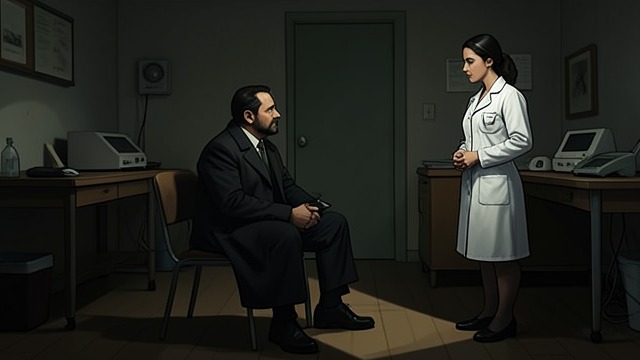
MacWhirter Rejects Rescue
A claim of ownership
MacWhirter argues that his life belongs to him and that suicide is the rational end to a life without health, work, money, or affection. He resents the nurse’s intervention as another example of people deciding what is best for him.
The nurse says other people must be considered, but his isolation makes that argument hard for him to believe.
An unknown future
She suggests that simply being in a particular place at a particular time may matter. Her thought anticipates the later rescue of Audrey, though neither can know it yet.
An Ordinary Week Reconsidered

Survival Without Triumph
A modest continuation
MacWhirter has found work and no longer intends to kill himself, but he describes life as a methodical sequence of days rather than a source of joy. Survival has not yet become gratitude.
He understands that suicide depends on an intense crisis and that his earlier phase has passed. He remains uncertain what to do with his free week.
The pull of a place
He decides to revisit Saltcreek and Stark Head. The choice brings him back to the location where his life was once interrupted and where someone else will need him.
The Necessary Interruption

A Life Meets Another
Experience becomes recognition
MacWhirter sees Audrey’s desperate movement and understands its emotional urgency because he once stood at the same edge. He catches her before he knows her name or her circumstances.
His presence at that moment is the kind of coincidence the nurse imagined: simply being somewhere can prevent a death.
The value becomes concrete
MacWhirter’s promise to protect Audrey gives his renewed life an immediate purpose. He is needed before he has fully decided that he needs anything himself.
Help Beyond the Police

A Witness Acts
A costly choice
MacWhirter offers Battle a fabricated sighting because he believes Audrey may otherwise be condemned. His help is not passive sympathy; it involves a serious moral and legal risk.
The lie gives Battle a way to test the actual murderer. It helps transform MacWhirter’s personal promise into an effective intervention.
Responsibility redefined
His earlier protest that no one had the right to interfere with his life is complicated by his willingness to intervene in Audrey’s. Care becomes a reason to accept responsibility for another person.
A Reason to Continue

From Rescue to Partnership
Purpose becomes reciprocal
Audrey chooses MacWhirter after he has saved her, but she refuses to frame the choice as a debt. She wants a life with him, and he agrees on terms that respect her independence.
MacWhirter, once convinced his presence had no value, has become central to another person’s survival and future.
A qualified hope
The ending does not erase his earlier despair or Audrey’s trauma. It shows instead that a future can become meaningful through unexpected attachment and freely chosen responsibility.
January, in the hospital after MacWhirter’s fall
August, after MacWhirter accepts a new job
September, when Audrey runs toward the cliff
September 13, when Audrey is threatened with arrest
After the case, before MacWhirter sails
